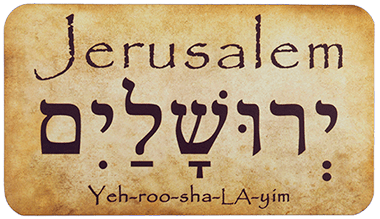
Why Hebrew?

There’s a question that’s been routinely posed to me as of late: “Why Hebrew?” I spent summer of 2017 at Middlebury College, a liberal arts school in Vermont whose summer language schools are globally-renowned for their rigor, efficiency, and most notably, their famous (and often frustrating) “Language Pledge.” The language I chose to study was Hebrew, and in this post I’d like to write a little bit about that.

To start, I think that learning another language properly and effectively is one of the greatest gifts you can give to yourself. Aside from the utility of bilingualism, there is also a therapeutic and empowering feeling that comes with being able to articulate your words through different tongues. In addition, lots of articles have been written about how being bilingual makes you experience time differently; how knowing a second language can benefit democracy; and how it can expand your capacities for self-awareness, rationality, and empathy, all of which further illustrate the importance of learning one.

However, these tremendous benefits can just as easily apply to learning any second language, so why Hebrew specifically?

I’ll start with the academic and/or professional answer that people would expect to hear from me when asking the question, i.e., the “utility” answer: This fall I start graduate school as an incoming M.A. student in New York University’s Near (Middle) Eastern Studies program, which requires that I reach an early-advanced level proficiency in one language of the region. I could probably have waived this requirement knowing both Arabic and Urdu (though Urdu is not a Middle Eastern language, my program allows it to pass), but chose not to. I wanted to learn something new.

I enjoy learning about the intersections between religion, politics, and law, and in my program, I would want to examine the historical trajectory of Islam and Judaism by exploring how these two faiths negotiated complex communal, philosophical, legal, theological, and political issues in relation to their traditions, leading up to the modern, contemporary era. I want to know how these communities imagine[d] themselves through their own eyes, in their own languages, and on their own terms.

Because part of my program necessarily entails “area studies,” I would want to look at Israel/Palestine as one of my models (both pre- and post-1948), because of its centrality for both faiths, its location as the epicenter of both religion and politics (historic and contemporary), and its symbolism of both fear and hope, anxiety and comfort, and peace and war, whether imagined or real.

At the same time, I’d like to become an academic of the modern Middle East, the history of Muslim societies, and of the Islamic tradition; one who is able to keep a sharp and critical outlook toward all of these broadly defined fields, with a focus on subfields within them. I haven’t specified a focus yet, but I think that’ll become clearer very soon. Thus, to have Hebrew as part of my linguistic repertoire would frankly give me the edge toward being a more versatile scholar.

The second reason follows my first: I want to use my studies to advance advocacy work. As American Muslims gain a foothold in the mainstream fabric of American life, they will begin to grapple with an assortment of complex issues from political engagement to intermarriage to institution-building to denominational disputes. On what terms will these conversations take place, who will dictate them, and what will be their outcome?

For me, I think it would be interesting to dig deeper into how American Jews dealt with these issues and if Muslims can — or will — follow that same path. While I’m not sure that knowing Hebrew is a requirement to explore these things, it’d certainly be a huge plus if one day I want to study the Hebrew Bible in order to understand how Jews negotiate[d] traditional texts with modern challenges, as a model (or, to be objective, as a caution) for Muslims.

In my Statement of Academic Purpose, I wrote that, “[a]s an aspiring scholar, I would synthesize my informal training in Islam and my formal training in social work with my graduate school research to reify the theoretical concepts and develop an Islamic social justice praxis. My goal is to produce scholarly work that promotes Islam within a social justice-centered framework, through an interdisciplinary, human, and moral lens that is both well-rooted within traditional scripture but also well-attuned to contemporary norms. Through my research, I hope to make a direct impact on policy both domestic and foreign as it pertains to the Muslim community.”

The ultimate goal is for me to be a better advocate for Muslims; one who synthesizes practical experience with academic training in order to produce tangible outcomes for communal betterment. I do not believe this is possible without me having an eclectic background, interdisciplinary training, and a comprehensive understanding of the history of Muslim societies and the societies they’ve interacted with.

But there’s a deeper meaning behind why I picked Hebrew, and when thinking of my decision in a more abstract way, I can’t really answer it with the same prepackaged answer. My first real exposure to the language — and probably the most visceral — was in Ben Gurion Airport in Tel Aviv, where I was interrogated for hours on end before being allowed entry into the country, after which I went directly to Hebron, Palestine, and didn’t engage with the language further (with the exception of hearing it at the checkpoints).

While I was there, I taught English to Palestinians while learning, for the first time, an Arabic dialect (I am familiar with classical Arabic because of my childhood Qur’an study sessions). I soon became fascinated with the language in a way that I never was before, because acquiring it enriched my appreciation of a culture, a history, a story, and a narrative. Suddenly, I saw language as more than just a different way to express the same things. This experience soon led me to dig deeper into the power of human connection and its ability to break down barriers and build meaningful relationships, and I immediately fell in love with the transformative power of language to do exactly that.

Hebrew, being the language of a religion, a people, and of prophets, may just as well end up enriching my understanding and appreciation of Arabic and Islam, but I feel that it would also enhance my capacity for building profound connections. And as someone involved in interfaith work, Hebrew acquisition would make it easier to build those connections with those that I work with.

This brings me to my final point about language: If you see it exclusively for its utility or material benefits, you will never fully grasp it. Think of language as more than just a different way to express the same thing, but as a key which opens the door to explore wholly new frontiers which teach you, challenge you, and transform you into a new person who is appreciative of the subtleties of the human condition and the nuances of life. I fully believe that if a new language is pursued with a noble and higher intent, it will make you a more loving person.

And that’s what I want to be.

-Asad
 

A Sunni Response to the Baghdad Bombing

In the third night of Ramadan 2017, men and women, both young and old, gathered at a bustling ice cream shop in the Karradah neighborhood of southern Baghdad during what should have been an ideal night out with the family to cool off from the long, hot day of fasting.

But the joyful night abruptly turned into a scene of death and destruction, as has too often painfully been the case in Baghdad, when the families were met with a car bomb, detonated by an ISIS fighter, killing 13 people and injuring dozens more.

It sent a tremor to a neighborhood that was known as one of the more secure areas in the city, yet one that was still healing from deep wounds, and the attack resurfaced a kind of trauma that Baghdad has endured one too many times. Muslims, in their most spiritually significant month, were again targeted by an extremist group , nay, a nihilistic death cult, claiming to operate in their name.

But one important detail has been overlooked in this story.

And it is that while Muslims are certainly both the primary fighting forces against ISIS, as well as its primary victims, the attack in Karradah was a deliberate attack on a predominantly Shi’ah Muslim community, calculated for a time when the attacker believed he could reach maximum casualties. This cannot and should not be omitted from the narrative.

This was an attack on a minority denomination that ISIS views as non-Muslim, subhuman, and thus worthy of death. While ISIS is the enemy of all Muslims, it is hard to ignore the fact that it engages in the disproportionate demonization and subsequent targeting of some groups before it does others. To defeat ISIS means to be honest about this, and to overcome its effects in the long-term means to confront this reality.

So what are we, as Muslims, and specifically as Sunnis, to do besides give our “thoughts and prayers?”

Act locally.

I do not believe all Sunnis should be held accountable for the actions of a few, for the same reasons I do not believe that all Muslims should be held accountable for the actions of a few. That we denounce such heinous, callous, reprehensible, and inhumane actions should be a given, and by principle, I do not buy into the notion of collective guilt — for anyone.

However, I do believe that while few are guilty, all are responsible. We each have an individual responsibility to make the world a better place and to work toward healing the wounds that our fellow brothers and sisters in humanity have endured, and our Shi’ah brethren deserve to know that we stand with them at a time like this one.

I speak as a Sunni, and to Sunnis, because it is the manhaj [methodology and denomination] with which I identify.  I know it’s not easy, and I fall short on this quite often, but at the very least, I think we need to take a moment to put aside the Middle East politics, the theological polemics, the whataboutism, and just submit ourselves to the humanity of the other.

To mourn with a community that has mourned alone for far too long.

I am not asking you to agree with any school of Shi’ah theology, to adopt Ja’fari or Zaydi jurisprudence, or to accept that Iran, or that any other entity that lays claim to an entire denomination, is a harbinger of good. I’m asking you to listen, to learn, and to embody the empathy that our Prophet (s) would want from us.

So how do we translate this into tangible action?

Well, on a local level, break bread at a Shi’ah mosque at least once this Ramadan, and use it as an opportunity to build meaningful relationships with the community that transcend superficial or forced bonds. Don’t make your relationship with the people you meet a transactional one that says we can only be friends so long as we work to fulfill our mutual interests; don’t make it a conditional one that says that until they condemn such-and-such that we will not talk to them; and don’t start with politics or theology. That’s not what this is about. This is about human empathy, brotherhood, and communion, which requires transcending transactions, conditions, and limitations.

Yes, you may notice they break fast at a different time, and that they pray slightly differently. You may speak to people who come from vastly different worldviews from yours, and you will not agree with all of it. They may have different experiences than ones that you are familiar with, despite coming from the same broad Muslim community.

These moments will both make you uncomfortable and liberated all at once. It’s up to you however, what you make of it, and which path you choose to take. Remember that unity is not uniformity, and agreeing or disagreeing isn’t the point: Learning and embracing are. And this process will discomfort you.

Remember that it isn’t always about you.

You are not going to untie the knots of the exceedingly complicated politics of the Middle East and the broader Muslim world, and you won’t arbitrate or solve centuries of theological disputation (for the record, I do not believe that the former is a result of the latter. I believe that contemporary Sunni-Shi’ah conflicts are political in nature and are driven along the fault-lines of sect and tribe, not theology, though that’s a different conversation), but you will emerge from the gathering a more wholesome human being, capable of shifting the discourse in your locality, even if it be one person.

Allow the experience to be something that deepens your humility and broadens your horizon. Take that first step, break that barrier, even if you’re alone in doing so.

ISIS targeted the same area last year, also during Ramadan, killing over 300 people in a shopping center. It was one of the deadliest attacks in Iraq since Saddam Hussein was overthrown in 2003. It tore apart whatever little semblance of security so many Iraqis thought they had. People are hurting.

The attack tragically showed us the depths of depravity that humanity is capable of. But what happened next showed us the heights of love that humanity is just as much capable of.

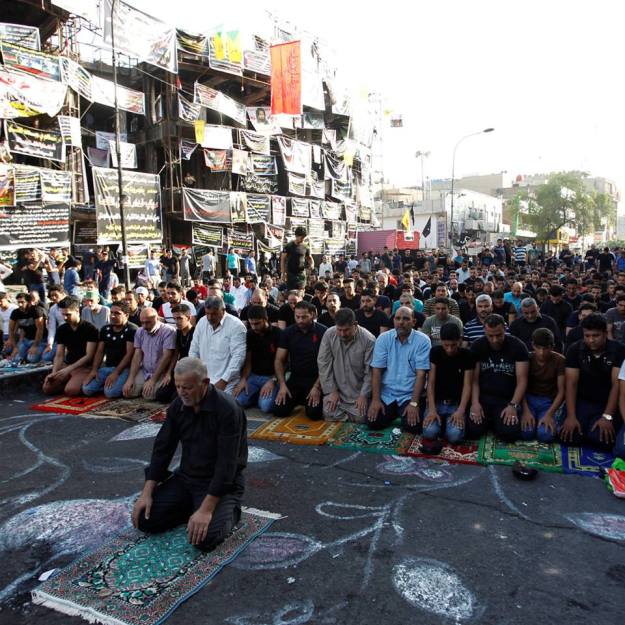
Iraqis of all stripes — Sunnah & Shi’ah — came together for a joint Eid prayer in response, partaking in an extraordinary display of unity and solidarity in the face of incomprehensible tragedy. There was profound meaning in that action. It showed us all that this doesn’t have to be the way, and that another way is possible.

That love can win.

Let us work toward building a world where something like that no longer has to be seen as an extraordinary feat.

Sunni-Shia Prayer

Sunni and Shia Muslims offering Eid prayers side-by-side in Karradah, Baghdad, at the site of the car bombing attack in July 2016. [Khalid Al-Mousily/Reuters]

– Asad

Readings: Week of 4/16/17

The weekly readings blog posts are coming back after a long hiatus. I regret that I wasn’t able to stay up to pace with them, but the first quarter of 2017 came with significant developments in my academic and professional life, which kept me extremely occupied. I hope to discuss those developments in a future post.

As always, readings are split into categories for ease of access.

Required Readings 

Readings on American Politics and Culture

Readings on International Politics

Readings on Syria

Readings on Turkey

Readings on France

Readings on Israel-Palestine


Reading on Muslim Americans and Islam in America


Readings on Religious Thought, Religious Life, Theology & Ethics

Personal Essays


Today I Learned: 2/7/2017

Today I Learned about the Moral Foundations Theory, and how this theory can be used to convince someone on the opposing side of an argument to support your viewpoint. The Moral Foundations Theory essentially posits that there are several foundations of “intuitive ethics” that people can have, with each individual foundation forming the ideological edifice of one’s sense of morality. Individuals, cultures, and communities construct narratives and virtues around these ethical foundations. The five foundations are 1) Care/Harm 2) Fairness/Cheating 3) Loyalty/Betrayal 4) Authority/Subversion 5) Sanctity/Degradation, with a potential sixth one being Liberty/Oppression; there’s more information about each of these on the website.

The researchers who developed the theory briefly discuss the manifestation of some of these ethics in American politics:

Much of our present research involves applying the theory to political “cultures” such as those of liberals and conservatives. The current American culture war, we have found, can be seen as arising from the fact that liberals try to create a morality relying primarily on the Care/harm foundation, with additional support from the Fairness/cheating and Liberty/oppression foundations. Conservatives, especially religious conservatives, use all six foundations, including Loyatly/betrayal, Authority/subversion, and Sanctity/degradation. The culture war in the 1990s and early 2000s centered on the legitimacy of these latter three foundations. In 2009, with the rise of the Tea Party, the culture war shifted away from social issues such as abortion and homosexuality, and became more about differing conceptions of fairness (equality vs. proportionality) and liberty (is government the oppressor or defender?).

In an article written by Olga Khazan in The Atlantic, she writes about this theory in the context of political persuasion as well, describing how the best way to convince someone to agree with, or at the very least understand your argument is to frame it through a moral foundation that they utilize for themselves.

The assumption that people often have about morality is that its universal and objective in all cases, and therefore anyone whose morality differs from my own must be fundamentally wrong. However, the reality is much more complex. We don’t take into consideration the multiplicity of factors that can potentially inform someone else’s morality, such as social upbringing, economic forces, cultural norms, religious views, and more. This isn’t to make a case for moral relativism, but to say that the human experience is far more complicated than we give it credit for.

In the article, Khazan shares results from a research experiment that sought to explore the effects of moral “reframing” on the political views of a sample population:

As part of the same study, which they published last year in Personality and Social Psychology Bulletin, Feinberg and Willer tried to see if this type of “moral reframing” would be more effective. Previously, they had found that conservatives were more likely to endorse environmental protections when researchers activated their concerns about purity, rather than the more liberal concern about “harm”: A picture of a forest covered in rotting garbage, in other words, performed better with Republicans than a forest of tree stumps. This time, the researchers tested four different hot-button political issues, each time trying to reframe it in terms of the values that the Moral Foundations Theory tells us are more important for the opposite political side. Again, for liberals that’s “harm and fairness (e.g. benevolence, nurturance, equality, social justice),” and for conservatives, “group loyalty, authority, and purity (e.g., patriotism, traditionalism, strictness, religious sanctity).”

The experiment was performed in a variety of ways to test for reliability, and the results proved to be consistent each time. The practicality of these studies can have profound implications for broader public discourse. For one, in a country deeply divided along racial, economic, geographic, and political fault lines, a dialogue-oriented approach to engaging in politics could possibly bridge those gaps and bring otherwise divergent communities together to a common understanding.

They key takeaway point of the article is here:

“We tend to view our moral values as universal,” Feinberg told me. That “there are no other values but ours, and people who don’t share our values are simply immoral. Yet, in order to use moral reframing you need to recognize that the other side has different values, know what those values are, understand them well enough to be able to understand the moral perspective of the other side, and be willing to use those values as part of a political argument.”

Khazan acknowledges that this is no easy thing to do. Politics is deeply personal, and for that reason, the challenge of empathizing with a view that is diametrically opposed to our own can prove to be immensely difficult. She also mentions that for this approach to work, both sides must be mutually willing to hear the other, and they both must be rational thinkers and actors. However, given Donald Trump’s unprecedented assault on the veracity of media, politicians, and democratic institutions, as well as his cultivating of a climate that engenders mendacity, appealing to moral foundations of a Trump supporter could may as well be futile.

She ends with one last point, namely that ad-hominem attacks do not work. When you attack someone for holding a certain view, it may cause them to staunchly defend themselves and embolden their stances. This wouldn’t be productive for either side. Of course, in the Trump era, avoiding ad-hominems completely may be the greatest challenge of all.

-Asad

The Priceless Value of Hope

During inauguration week 2009, every day after school I would purchase multiple copies of the local papers, hoping I’d sell these soon-to-be historic documents for a fortune one day. Looking at them now, I think I’m going to hold on to them. I am certainly not the type to put any individual on a pedestal, and I have my criticisms like anyone else, but I’d be lying if I said that these last eight years were anything short of transformative and empowering. And you really can’t put a price on that.

-Asad

obama-papers

On Islam and Reform

A question that I am asked to engage with often, by non-Muslims but even by Muslims, is about Islam and reform, with various iterations of the question asking whether Islam is reforming, if it needs reform, or even if it can reform. The questioners are usually genuinely curious as opposed to malicious, but it nonetheless always discomforts me, not because I think it isn’t worth exploring, but because it carries implicit assumptions about religion and religious development as a whole and perpetuates simplistic characterizations of the Islamic tradition and of Muslim societies more specifically.

To start, the question assumes that Christianity is the normative religion and that all other religions must be viewed through its lens; that Islam is inherently backward until it develops a counter-current to serve it in the same way Protestantism served Christianity; that the problems Islam and Muslim societies encounter today mirror those that were encountered by Christianity in the 16th century; and that the wide array of cultures, beliefs, practices, histories, and politics of dozens of Muslim societies around the world can be exclusively attributed to, or even reduced to, an essentialized “Islam.”

Signature recently interviewed Professor Moustafa Bayoumi, a Professor of English at Brooklyn College, about his thoughts on Trump, Islam in America, and the ‘War on Terror,’ and one of the questions the interviewer posed was about this very topic.

I was first exposed to Bayoumi when I entered college as a freshman and was required to read his book ‘How Does It Feel to Be a Problem?: Being Young and Arab in America.’ It was an incredibly illuminating reading for me because it chronicled the everyday experiences of Muslim and Arab youth who were only a few years older than me (I later learned that I actually know one of the seven stories!) and how they grappled with their identities in post-9/11 America. It should be read by anyone interesting in gaining a glimpse into the real lives of young Muslims and Arabs.

In one of the chapters of his new book, ‘This Muslim American Life: Dispatches from the War on Terror’, Bayoumi critiques a theory put forth by Reza Aslan (though the theory itself is not exclusively Aslan’s) that Islam, like Christianity, is going through a reformation. Bayoumi was asked to expand a little bit on his thoughts as they pertained to his critique of Aslan and this theory.

The exchange is worth reading here:

SIG: In the chapter titled “The God That Failed,” you address one of the theories that Reza Aslan puts forth in his book No god but God: Islam is going through a reformation much in the same way that Christianity is. That book was published in 2005. Your commentary appears in your book This Muslim American Life, published ten years after that. Now, a year-plus later, do you think that there are still very definite parallels between these two reformations happening?

MB: I was (and remain) critical of this idea that Aslan and many others have put forth that Islam is going – or must go – through a “reformation.” For one thing, this idea places the history of Protestant Christianity as the model of all religions. Then it assumes that Islam (or any other religion) will or must follow suit, but none of that is intellectually tenable. The history of Islam is different from the history of Protestantism, which is different from the history of Hinduism, etc. Religions are born, develop, and change in our world due to a series of reasons that have to do with human society, and they won’t all travel down the same linear path.

Yes, parts of the Muslim world are in crisis today. But we would be better served by looking at the specific histories of nations and regions, understanding the legacies of colonialism and foreign interventions, examining the roles of resources and their allocations or misallocations, and more. Thinking that the problem today is that Muslims lag behind Christians in their development is much easier to do, but I think it’s just wrong.

In fact, there are so many different versions of Islam in the world, and Islam has no single central authority (such as the pope for the Roman Catholic Church) to define doctrine, so it’s also very difficult to talk about Islam as one single thing, which leads me to my other reservation with Aslan’s way of thinking in his book. It assumes that Islam is the main or sole reason Muslims act in the world, but that’s also ludicrous. When we are looking to understand other people’s motivations for their actions, we will consider politics, history, economics, psychology, and the whole panoply that makes up human behavior. But when we talk about Muslims, we reduce everything to Islam. The concept that Islam is the sole motivator of Muslim behavior is not only wrongheaded but is also simplistic, leading us to bigoted ways of thinking and not providing us with any useful answers to our questions.

Bayoumi acknowledges that parts of the Muslim world have some soul-searching to do, but that in order to find the answer to their crises, we need to take a multidisciplinary approach that sees Muslim societies through their own unique circumstances, as opposed to trying to understand them by  situating their situation(s) in relation to Christianity. His incisive answer does not only aptly elaborate as to why Aslan’s theory is problematic, but also goes further by demanding of us to be more critical of our approach.

I would still suggest reading Aslan’s ‘No god but God’ nonetheless. I think it is an important contribution to the conversation and serves the purpose of enriching the dialogue around this issue. A final additional reading which explores the nexus between religion and violence (or lack thereof) is Karen Armstrong’s ‘Fields of Blood: Religion and the History of Violence.’ I haven’t finished this one because it is quite dense, but because it dramatically transformed the way in which I viewed religion in relation to the modern world, I think it’s also worth delving into.

-Asad

Heartwarming Holiday Stories

A short list of heartwarming holiday stories from this year that will uplift your spirits and restore your faith in humanity. The world can feel like a dark place sometimes, and there may be moments where we feel hopeless about the state of the human condition because of it, but we can’t allow hopelessness to defeat us.

Remember the words of Anne Frank: “In spite of everything I still believe that people are really good at heart. I simply can’t build up my hopes on a foundation consisting of confusion, misery, and death. I see the world gradually being turned into a wilderness, I hear the ever approaching thunder, which will destroy us too. I can feel the sufferings of millions and yet, if I look up into the heavens, I think that it will all come right, that this cruelty too will end, and that peace and tranquility will return again.”

Do not be disheartened, always maintain hope, and most importantly, remember that love conquers all. 

Enjoy: 

‘No one eats alone’: Muslim-owned restaurant offers free Christmas meals for the homeless, elderly by Amy B. Wang (Washington Post)

The Hanukkah-Christmas convergence couldn’t be more symbolic of the light we must embrace by Petula Dvorak (Washington Post)

Slideshow: Christmas and Hanukkah Around the World by Wall Street Journal (Wall Street Journal)

A Syrian Jew’s message to Aleppo: Keep tradition and don’t lose hope by Ben Sales (Jewish Telegraphic Agency)

Christmas in Karachi: Who needs reindeer if you have camels? by Dawn News (Dawn News)

Christmas peace train inaugurated in Pakistan by WION (WION News)

Hebrew-Arabic Calligraphy From God’s Own Country by Paul Rockower (Huffington Post)

Why It’s Not Wrong To Wish Muslims Merry Christmas by Mustafa Akyol (New York Times)

Muslim choir girls sing Arabic Christmas carols in touching video from Beirut by Bethan McKernan (The Independent)

Iraqis Celebrate Christmas Near Mosul After ISIS Pushed Out by NBC News (NBC News)

King of Bahrain hosts menorah-lighting ceremony by Times of Israel Staff (Times of Israel)

Ma’oz Tzur and the “End of Christianity” by Yitzhak Y. Melamed (TheTorah.com)

To all those celebrating/observing Hannukah, Christmas, Kwanzaa, or just another day of life, I send you much love and warmth. Have a joyous, festive, and blessed holiday season!

-Asad


Readings: Week of 12/18/16

Masha Gessen Readings

Masha Gessen is a Russian-American writer, philosopher, and activist who has written extensively on authoritarianism and autocracy as they relate to Vladimir Putin’s Russia. She grew up in a Jewish family and her great-grandfather was part of the Jewish resistance in World War II Europe (he joined the resistance after realizing that working “within the system” to save his people proved futile). As a part of history, her story is captivating, but as a part of reality, it is also foreboding.

Gessen published two important articles this week, but along with them I’m also sharing two older ones she’s written. Personally, I think all four are required readings. This is also the order in which they should be read:

  1. Autocracy: Rules for Survival (New York Review of Books)
  2. Trump: The Choice We Face (New York Review of Books)
  3. The Putin Paradigm (New York Review of Books)
  4. Arguing the Truth with Trump and Putin (New York Times)

American Politics

Syria

Other Middle East

Europe

Extra: Most Read Stories – New York Times

-Asad


Today I Learned – 12/22/2016

Today I Learned a little bit about the difference between civilizational conservatism and ideological conservatism, thanks to Peter Beinart’s recent article in The Atlantic, where he discusses the shift of American conservative foreign-policy thinking as it relates to Russia and Islam/Muslims.

During the cold war, conservatives were united in their opposition to Russia, but Beinart argues that underneath this opposition were divergent worldviews whose appreciable differences have manifested themselves only in today’s unique political climate. He states that two types of conservatives existed during the cold war: “Civilizational,” i.e., those who saw America’s struggle against Russia through the prism of religion, and “ideological,” i.e., those who saw this struggle through the lens of governance.

To understand this shift, it’s worth distinguishing two different strains of conservative foreign-policy thinking during the cold war. Civilizational conservatives like Jerry Falwell and Pat Buchanan saw the cold war as a struggle between two countries defined primarily by their view of God: The Judeo-Christian United States versus the atheistic Soviet Union. Ideological conservatives like Paul Wolfowitz and Elliot Abrams, by contrast, saw the cold war as a conflict between two countries defined primarily by their view of government: the liberty-loving United States versus the totalitarian USSR.

He mentions that a third group also existed, though this group hasn’t significantly shifted in today’s political juncture.

(A third group, composed of realists like Henry Kissinger and George Kennan, saw the cold war as a traditional great power conflict between two countries defined primarily by their geopolitical heft.)

I found Beinart’s analysis to be especially trenchant because as a theoretical framework, it helped me understand today’s conservative schism a little better. For one, I no longer see it as a paradox that some conservatives are kowtowing to Russia, but as an action consistent with deeply-rooted beliefs. This of course, does not make it any better.

The collapse of the Soviet Union brought about an end to the convergence between these two classes of conservatives and the resulting cleavage demonstrated the possibility of each side taking an opposing view of the other depending on the circumstance. Beinart gives the example of Serbia:

In the 1990s, after the Soviet Union collapsed, ideological conservatives and civilizational conservatives parted ways. The clearest example was the former Yugoslavia. In the 1990s, Serbs brutalized the largely Muslim breakaway republic of Bosnia. Ideological conservatives like Robert Kagan urged NATO to intervene in the name of human rights. Cultural conservatives like Buchanan wondered why the U.S. was going to war to defend Muslims against Christians. Ideological conservatives saw Russia, Serbia’s traditional ally, as defending tyranny and ethnic cleansing. Cultural conservatives saw Russia as defending Christendom.

After 9/11, the two sides converged once again and much of the distinction became blurred. George W. Bush and much of the Republican party during and after his time maintained a politics of ideological conservatism. But the events precipitated by 9/11, including the ‘War on Terror’, arguably incubated the civilizational narrative because it conveniently aligned with the ideological narrative of the war being inherently just and good. Despite the divergent worldviews of civilizational and ideological conservatives, they dovetailed well in a post-9/11 world.

So while the Bush administration and conventional republicans like Mitt Romney and John McCain vocally advocated for an ideological conservatism and distanced themselves from impugning Islam as a religion, their concomitant alliance with civilizational conservatives on the war (perhaps tacitly) gave opportunity for the latter’s ideas to gain traction within the conscience of the GOP’s base.

And thus, civilizational conservatism has now recrudesced itself under a Trump administration.

Trump’s approbatory remarks towards Putin and the GOP’s generally softening stance toward Russia have once again manifested the difference between the two conservative camps:

Ideological conservatives loathe Putin because he represents an authoritarian challenge to the American-backed order in Europe and the Middle East. But many civilizational conservatives, who once opposed the Soviet Union because of its atheism, now view Putin’s Russia as Christianity’s front line against the new civilizational enemy: Islam.

The resurgence of a civilizational conservatism, perhaps in its most staunch, untrammeled, and vicious form, creates the stage for an internecine conflict within the Republican party whose winners may decide not only the future of conservatism, but of the country as a whole, and perhaps the world.

Will the GOP define Americanism as the defense of a set of universal principles or as the defense of a racial and religious heritage? The answer won’t only help determine how well liberal democracy fares overseas. It will help determine how well it fares at home.

-Asad

Readings: Week of 12/11/16

Required Readings:

On Syria:

On Islam in the West:

On Global Student Activism:

On media engagement, propaganda, and conspiracy theories:

Other Middle East:

-Asad